
This is part 2 of a guest series by our PGPF Fiscal Intern Dakota Stacy
With the largest budget reform in Japan since 1945 being passed a few weeks ago to target utilities, spending is in full action and the consequences are real. While many issues from zombie companies to stagnating growth exist, utility subsidies deserve more attention. Firstly, excessive utility subsidies obscure price signals and disincentivize renewable energy, which has materialized through the lack of EVs and reliance on foreign energy in Japan. Secondly, utility subsidies corrupt foundational government procedures as observed from a weakening parliamentary, an unprecedented budget reform, and accusations of fraud.
Why Utilities?
Japan not only pays on average 72% more per kWh of electricity compared to the U.S., but a staggering 294% more compared to neighboring Asian countries. There is a wide breadth of factors under the umbrella of imports that contribute to this high cost, but the one I want to highlight today is weak yen — an emergence of Japan’s high debt.
As explored in Part I, one reason for a weaker yen is that Japan distorted price signals through artificially setting the inflation rate via purchasing government bonds, but this led skeptical investors to otherwise sell yen instead of bonds. This resulted in weaker purchasing power for the Japanese, and with no choice but to import a necessary good like electricity, the costs of importation are compounded.
Subsidies Create Subsidies
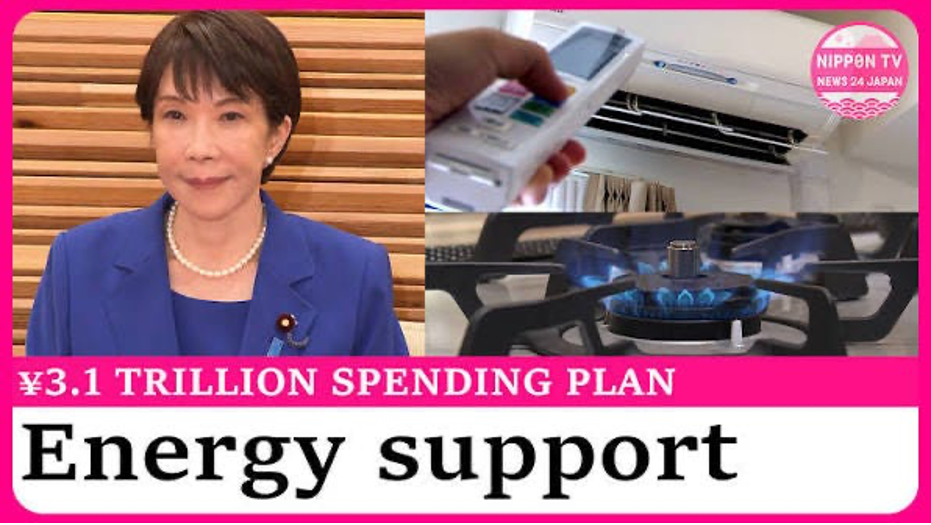
On May 26, the Takaichi administration decided to use $3.12 billion from reserve funds for electricity and gas bill subsidies. Then, June 5th, approved a supplementary budget of an additional $20 billion for further utility subsidies and to ease the woes of high living costs. Before that, a staggering $77 billion in utility subsidies was allocated in various forms from 2022-2025.
Additionally, a research project by Michiyo Miyamoto and Sam Reynolds found that Japan’s extensive subsidies have obscured its energy markets and led to minimal investment in alternative means to energy besides fossil fuels.
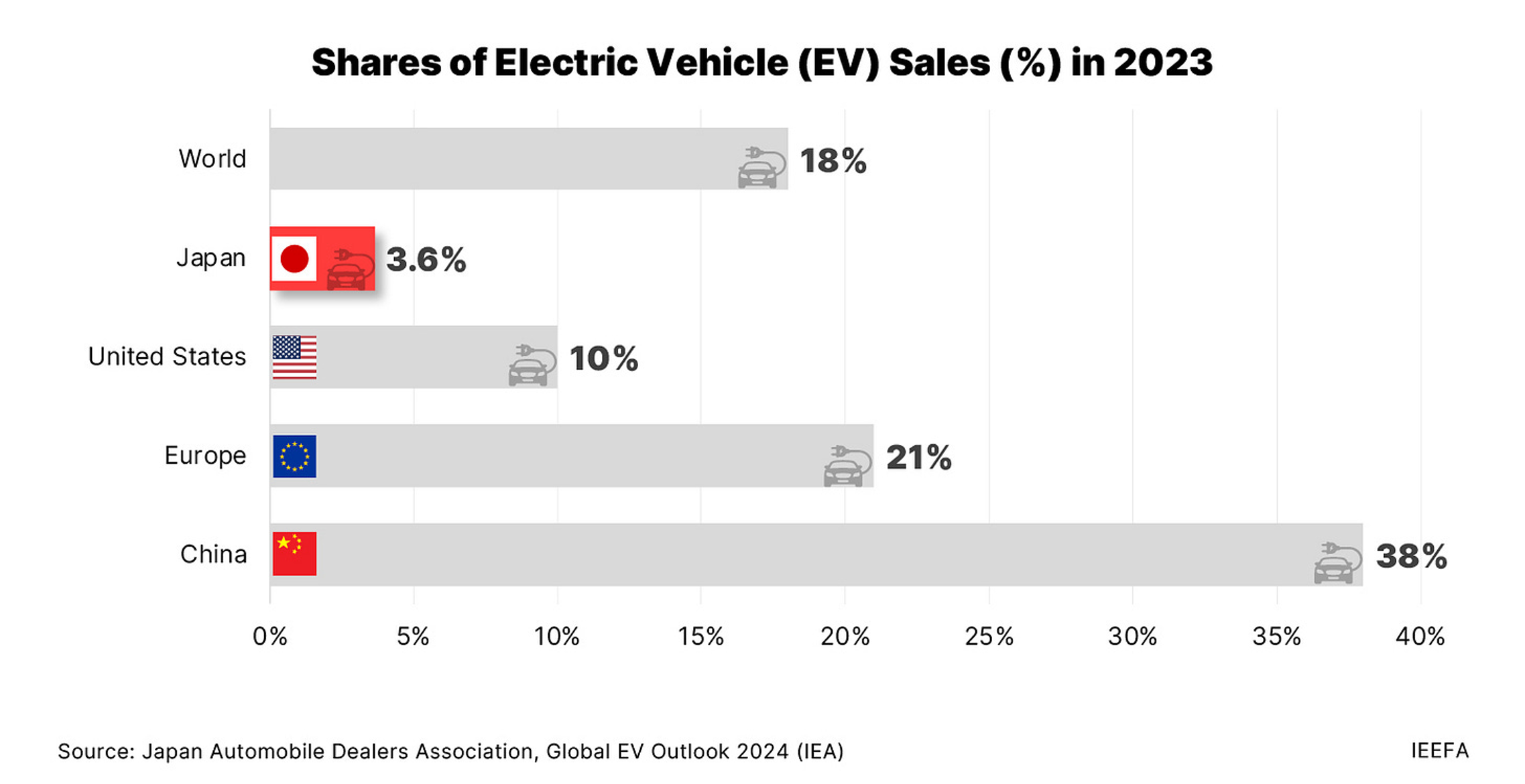
One would imagine that Japan would be on the frontier of development because cars are one of Japan’s biggest exports, but the opposite is true.
“Japan’s failure to keep pace with the global electric vehicle (EV) trends undermines its decarbonization efforts and risks eroding the global competitiveness of its automotive industry, which accounts for over 17% of the country’s total exports.”
In 2023, China overtook Japan as the world’s largest car exporter due largely to higher shipments of Chinese EVs.
Moreover, subsidies divert capital to governments preferred firms and industries, and often away from more productive uses that would otherwise be determined by the market. Jack Salmon wrote about this issue in the U.S. context, “By favoring renewable energy through subsidies and tax incentives, the IRA has diverted capital away from nonrenewable energy, distorting investment patterns and likely contributing to a national shortage of natural gas turbines.”
If Japan continues to subsidize importing electricity among other utilities, they will fall further behind in one of their most prominent industries, weaken innovation, redirect capital to government-backed institutions, and deal with another unintended consequence: a stronger government.
Centralization Breeds Centralization
Another fault of the enormous spending is a growing concern in Japanese media that fiscal policy and its democratic foundation is eroding. Ohinata put it well in Asahi Shimbun,
“not only has the principle of balanced budgeting been jeopardized, but even the fundamental principle of modern parliaments—that members of parliament, as representatives of the people, decide how the budget is spent—has become precarious.” (translated from Japanese)
From this quote we see there are two problems.
(1) the principle of budgeting is jeopardized
(2) the foundation of the parliament is precarious
For (1), According to Article 4 of Japan’s “Public Finance Act”, the government may not run budget deficits. Funny enough as it sounds, it’s true, and they get around it by issuing “construction bonds”. This specific bond, through many loopholes, can be used for practically any good. It’s like having a corporate credit card designed for travel, and in the rare case, loosely defined “emergencies”. (We can imagine where most of the spending comes from). This explains why Japan was able to invest plentifully in construction as observed from the asset price bubble, and why they are still able to take out massive debt today for other purposes.
Regarding (2), Takaichi’s decision to take out more debt on May 26th and June 5th amassing over $23.12 billion dollars was highly unusual. The first was done without discussion and ignored proper parliamentary deliberation. Then, a few days later, the second budget reform was announced and in the words of Japan’s finance minister, Katayama,
“is clearly the biggest overhaul since the end of the war.” — “That’s the level of commitment we are bringing to it” (Business Times).
With over 270% of GDP in liabilities, Japan should be the first country to speak of budget reforms in unprecedented terms. Yet, the extraordinariness here unfortunately lies in more, not less government spending.
Fraud & Opportunities For Cheating
The LDP (Liberal Democratic Party) in Japan announced today that they are proposing a review of the budget reform, Chairman Kobayashi reasoning that:
The proposal points out that subsidies and funds have “an unclear flow, making them susceptible to skimming and fraud,” and calls for improved transparency. As specific targets for review, it cites subsidies to support the introduction of solar power panels and electric vehicles, which are heavily reliant on China. (Translated from Japanese)
Today we found out that the largest budget reform in history in Japan may have fraud and cheating opportunities. The sky too is blue.
On a serious note, this is not the first time subsidies were abused. During COVID, the Japanese government gave out employment adjustment subsidies which prompted individuals and crime syndicates to steal from the government, ranging from dummy companies to faking hotel stays. Of the 6 trillion yen given out (to just companies alone) only 13.5 billion has been identified as fraudulent. That is 0.225%. To assume significantly more has been unrightly captured I hope is not a controversial claim.
The LDP is rightly concerned about opportunities for fraud to take place, but they also bring up a point I mentioned earlier: Japan is falling behind in renewable energy. While subsidizing renewables instead of fossil fuels may be a better version of a wrong approach, it’s nonetheless a step in the right direction and a recognition of the fact that Japan needs to incentivize its energy producers and automakers better.
The Caveat — Japanese Should Freeze and Overheat?
Some may argue that without subsidies, poorer Japanese citizens would freeze in the wintertime; and in summer, much like the terrible consequence of high energy costs found in Europe, die from heat strokes. Instead, a step in the right direction would be to support low income households while removing subsidies for energy companies and most individuals. After all, the subsidy for households comes out to roughly $12 a month, while the median Japanese family makes 30,000$ a year. We are talking about the equivalent of eating out for dinner.
Further, Japan maintains a relatively narrow income gap, where differences between the lowest income quartile and the median is only 1.3-1.5x. The subsidies seem most dire for those who earn less, but most of the those who earn less are part time workers and people early in their career — as to be expected in a more homogenous population like Japan or the Nordic countries. Perhaps a case could be made to offer subsidies for the poorest demographics or particular areas hit hardest by electricity demands, and only a fraction of the money being spent would be needed in that case.
Again, arguing over which subsidy is better is analogous to debating if alchemy or magic is superior. In the end, nothing is free. Subsidies are a symptom of disease, and that disease is debt.
The Two Take Aways:
(1) Excessive utility subsidies obscure price signals and disincentivize renewable energy. There is no incentive for innovation, as Japanese energy companies enjoy the benefits they receive from government funds. Consequently, Japan stays complacent in a loop where once the subsidy runs dry, they are without an option but yet another new subsidy. This new subsidization contributes to a higher debt, further weakening the yen, resulting in lower purchasing power that raises utility prices. It’s similar to filling a leaking boat with ballast to keep it stable. the weight keeps it upright temporarily, but sits lower in the water with every addition, making the next leak even more troubling.
(2) Utility subsidies create a feedback loop that expands government power. As government becomes more centralized, it relies increasingly on subsidies, which support government-backed firms and industries and further consolidate state authority. Despite promises of lowering Japan’s debt in Takaichi’s campaign, they have continued to spend tens of billions of dollars on subsidies, approve changes unprecedented since wartime Japan, and weakened the deliberation process that keeps radical change from taking place. Not only that, but as seen from past government failures, people take advantage of subsidies — and they take advantage of them hard. There will more than likely be fraud with this budget reform, and many will get rich off the expense of others.
By far the greatest barriers Japan face are the same ones they've confronted for 60 years: their stifling medieval cultural and economic traditions of subordinating women, obedience to elders, protection of retail and ag sectors, love of multi-sector monopoly power, and extreme isolationism. The results are (1) high relative consumer prices, especially for food, (2) loss of production because women are expected to leave full-time workforce and are denied career options, loss to business of gender advantages of women (especially essential oral communication, empathy, and teamwork); women responding the only way left to them: REFUSING TO MARRY or not having kids, as birth rates the lowest in the world, (3) lack of of risk taking, especially innovation (not just imitation) by all the monopolies (lack of business failure is the sign of low competition, not health competition), and (4) strongly discouraging study abroad and barring Foreign Direct Investment (only offer licensing) further insulates Japan from the Global economy! In today's upside down world, "Communist, planned, authoritarian China is far more competitive than Japan in several important ways, (5) sure elder power eliminates the need for a social pension system, but it has adults children into the 40s and 50s living at home and subservient to aged parents' anti-change, selfish privilege; that's a recipe for the economic stagnation we've seen for the past 35 years, not "respect" for their traditions!