

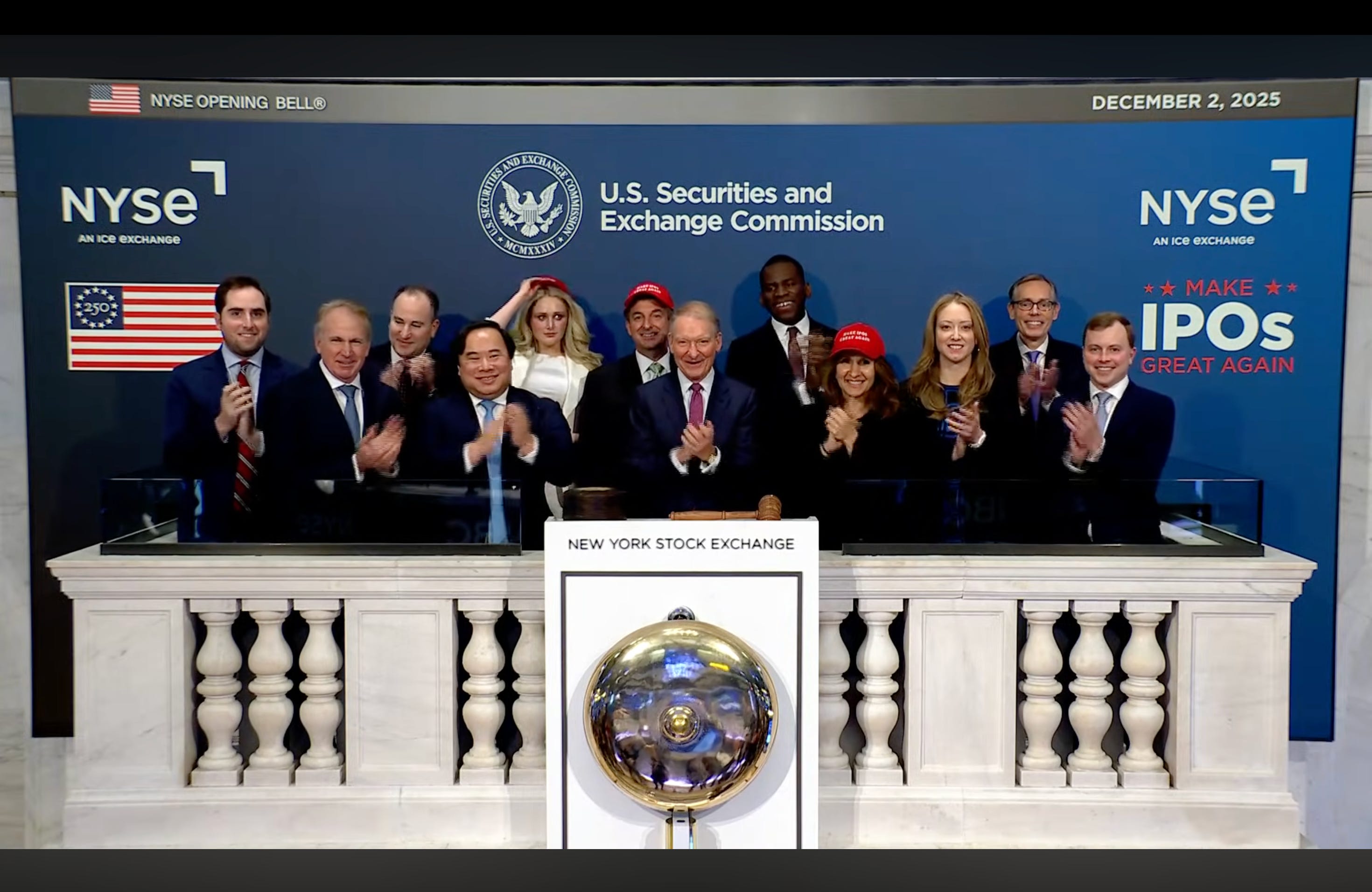
Late last year Paul Atkins, the Chairman of the Securities and Exchange Commission (SEC), recently rang the opening bell at the New York Stock Exchange (NYSE). During his visit, he gave extensive remarks reflecting on the upcoming 250th anniversary of the founding of the United States, the history of this country, the history of the exchange, their intersection, and the centrality of capital markets as the engine of U.S. growth. Chairman Atkins reiterated the core goals for his term, and they largely center around one theme: modernizing American capital markets. Modernizing American capital markets are a prerequisite to making IPOs great again: a core tenet of Atkin’s agenda. To achieve that goal Chair Atkins has set his sights on regulatory reform, particularly in the area of disclosure requirements.
Disclosure documents are a broad term intended to refer to the swarm of paperwork public companies are required to produce to provide information to investors. Public companies must file various types of reports — some quarterly and others annually. In mid-January Chair Atkins announced an initiative to reform Regulation S-K, a core set of rules dictating filing requirements for public companies. Regulation S-K governs the non-financial disclosure requirements in registration statements and periodic reports. Registration statements include forms such as Form S-1, and periodic reports include 10-Ks or 10-Qs.
In his remarks, Chair Atkins announced that the SEC’s Division of Corporation Finance would engage in a “comprehensive review” of Reg S-K. The reasons for the call for reform? Reg S-K has expanded to include information that may not be material to investors. Compiling and documenting such information costs companies precious time — and time is money, after all. Thoughtful reconsideration of rulemaking is an essential step in reducing the regulatory burden on public companies so they can access the capital they need unencumbered by burdensome regulatory requirements. Reforming the disclosure framework requirements is a great place to start.
Reforming Regulation S-K not only decreases the compliance burden on companies but also eliminates the need for investors to sift through miles-long disclosure documents to find the information they actually consider material. Returning to materiality as the guiding principle in disclosures is sorely needed. Critics may claim any reform to the current disclosure regime means less information will be disclosed, but that’s not necessarily the case.
The core goal of disclosures is to provide material information to investors, and if reform means cutting away obstacles such as duplicative information or information required as a box-checking exercise, the information investors need to make informed decisions will be more easily accessible. Certain disclosure categories, particularly risk factors and overlapping narrative sections, can become lengthy and defensive. The real challenge is encouraging specificity and materiality without increasing liability uncertainty.
It’s not just Chair Atkins who sees the need for disclosure reform. SEC Commissioner Hester Peirce has long advocated for disclosure reform, even before Chair Atkins joined the Commission as Chairman. On Regulation S-K, Commissioner Peirce supported efforts to “modernize, simplify, and enhance” certain financial disclosure requirements. During an open meeting of the Commission in 2020 on the topic of Sections 101, 103, and 105 (the description of the business, and legal proceedings, risk factor disclosure requirements), Commissioner Peirce commented that this was a step in the “right direction by making the rules more principles-based and rooted in materiality, which provides registrants with sufficient flexibility to tailor disclosures to their unique circumstances.”
And that’s exactly the point: flexibility.
Allowing registrants the ability to tailor their disclosures allows them to provide information they know investors will find useful when considering investment. Other facets of Regulation S-K have graced the stage of the SEC’s microscope. Item 402, which covers executive compensation disclosure, was the core focus of a recent SEC roundtable.
Chairman Atkins stressed the importance of regulatory reform as an actionable path in service of modernizing American capital markets. His remarks at the NYSE charted the path from a young nation in formation to a nation with capital markets that are the envy of the world. He expressed worry that those same markets have been burdened “in recent years, our regulatory frameworks have veered from the founding ideals that helped the United States to once stand without peer as the world’s destination for public companies” (emphasis added). Chair Atkins has emphasized a real need to reform disclosure requirements, and it’s become clear that disclosure reform is one of his top priorities. And for good reason.
What’s at stake for the world’s preeminent capital source if we sit idly by and do nothing?
Well, Chair Atkins tells us, “in the mid-1990s, there were more than 7,000 companies listed on the U.S. exchanges, from small-cap innovators to giants of industry. Yet by the time that I returned as Chairman earlier this year, that number had fallen by roughly 40 percent.” What’s more, in his recent testimony before the House Financial Services Committee, Chair Atkins mentioned that “public companies spend $2.7 billion a year to file their annual reports. This is $2.7 billion that companies are not reinvesting in their businesses to create jobs. $2.7 billion that our disclosure regime is diverting from your constituents to corporate lawyers, accountants, and consultants.”
The U.S. simply can’t afford to continue down this path. Companies seeking to raise funds in our public markets are wasting precious capital on bureaucratic compliance exercises instead investing in their business. Such compliance efforts are particularly costly for small issuers and risk delaying IPOs. And while not every company will go public to raise capital, it’s important that companies that want to can clearly anticipate the impending compliance costs of a principles-based process rooted in materiality.
Simplifying disclosures by reestablishing them in materiality provides markets with clear, useful information companies know investors need. Clearing barriers to our capital markets, such as barriers littering the disclosure regime, expands access to the benefits of American capital markets — namely, to the deep liquidity for companies seeking funding and high returns for investors. The Commission shouldn’t be weary to rethink how to reshape rules to meet the needs of modern capital markets. Figuring out how the disclosure regime can be tailored to our evolving capital markets is a tall task, but the Atkins’ SEC is up to it.